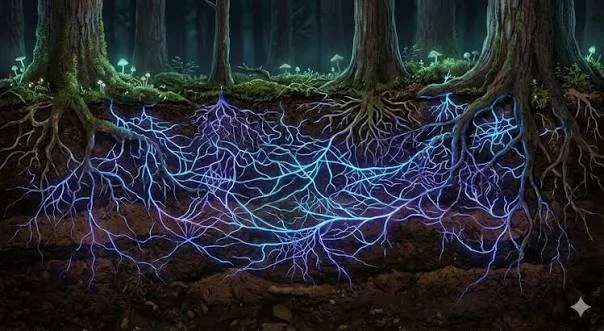
Water, Nutrients, and Chemical Signals
Water
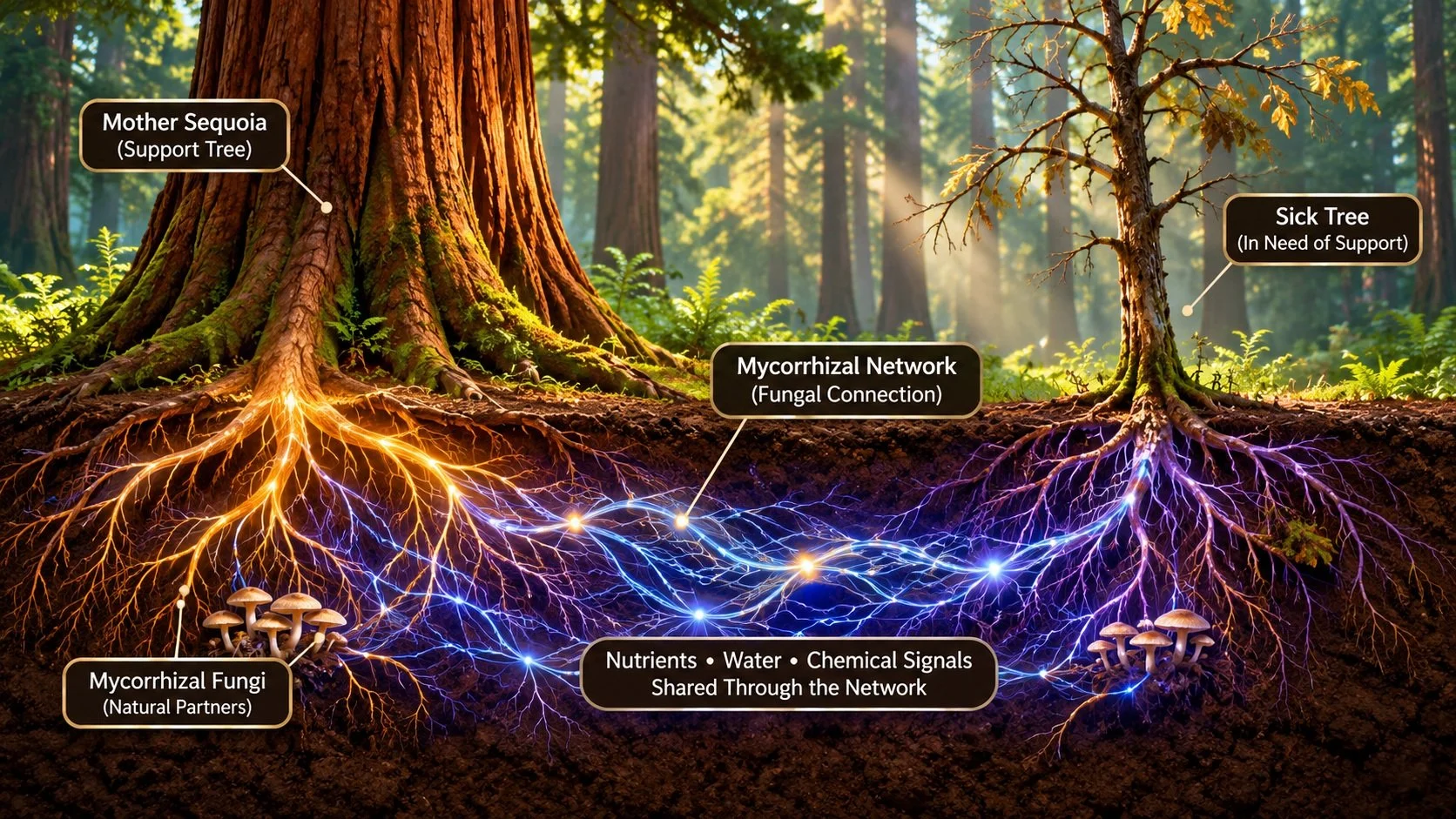
Trees depend on water to survive, grow, and transport nutrients throughout their branches and leaves. Mycorrhizal fungi can help tree roots access water in the soil, extending their reach into areas that roots alone may not easily reach. These partnerships help trees cope with changing conditions, particularly when water becomes scarce.
Nutrients
Underground fungal networks connect with tree roots, helping them absorb essential nutrients such as phosphorus and nitrogen from the soil. In return, trees provide the fungi with sugars produced through photosynthesis. Research suggests that resources can also move between connected plants through these networks, revealing the cooperative relationships that can exist within forest ecosystems.
Chemical Signals
Trees communicate with their surroundings through chemical signals. When attacked by insects or threatened by disease, some trees release airborne chemicals that can alert nearby plants and trigger defensive responses. Underground fungal networks may also facilitate chemical signaling between plants. These discoveries reveal that forests are not simply collections of individual trees, but complex living communities constantly interacting with their environment.
How Trees Protect Themselves: Insects, Fire, Drought & Disease
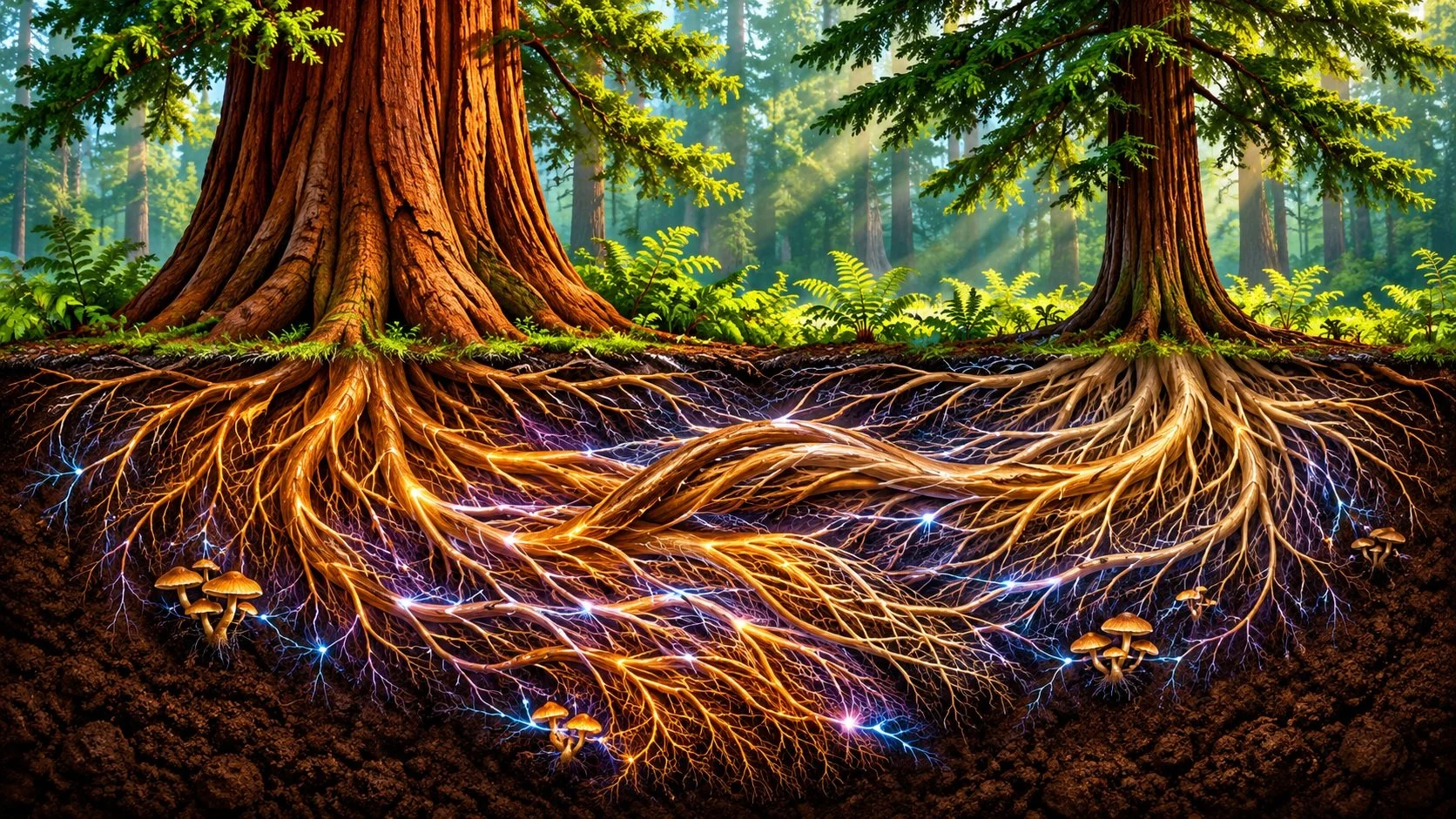

Thanks in large part to the research and work of Dr. Suzanne Simard, we know how trees communicate.
The Science Behind the Story
Beneath the forest floor lies a remarkable living network connecting trees through their roots and underground fungi.
Scientists have discovered that mycorrhizal fungi form partnerships with tree roots, helping trees absorb water and nutrients while receiving sugars produced through photosynthesis. These underground connections can also facilitate the movement of nutrients and other resources between plants.
Research by forest ecologist Dr. Suzanne Simard has helped reveal the complexity of these relationships and the interconnected nature of forest ecosystems.
In The Whispering Trees of Blackwood Forest, real ecological science meets imagination, bringing this extraordinary hidden world to life through adventure, friendship, and discovery.
Insects
Physical Barriers: Thick bark, waxy leaf cuticles, and hairy surfaces make it hard for insects to land, chew, or lay eggs.
Resin and Sap: Conifers and many hardwoods ooze sticky pitch, resin, or latex when wounded. This traps bugs, flushes out eggs, and seals entry holes.
Chemical Deterrents: Trees produce toxic or foul-tasting secondary metabolites (like tannins, terpenes, and phenols) that make leaves unpalatable to herbivores.
Calling for Help: When chewed on by caterpillars or beetles, some trees release airborne volatile organic compounds (VOCs) that attract beneficial predator insects (such as parasitic wasps or ladybugs) to eliminate the pests.
Drought
Root Architecture: Trees grow deep taproots to tap into deep water tables and wide, lateral surface roots to capture sudden rainfall.
Stomatal Regulation: Trees can close microscopic leaf pores (stomata) to dramatically reduce water loss through transpiration when soil moisture drops.
Leaf Shedding: Drought-deciduous trees drop some or all of their leaves early in a dry season to conserve internal moisture.
Hydraulic Adjustments: They adjust cellular osmotic pressure to keep water moving from roots to the canopy even when soil is dry.
Fire
Thick, Corky Bark: Species like redwoods, ponderosa pines, and cork oaks possess thick, insulating bark that protects living vascular tissues (phloem and cambium) from surface fires.
Self-Pruning Lower Branches: Many fire-adapted trees drop their lower dead branches as they grow, removing the "ladder fuels" that let a ground fire climb up into the main canopy.
Epicormic Sprouting: Some trees can regenerate new shoots directly from dormant buds underneath the bark or from the root crown if the main trunk is scorched.
Serotinous Cones: Certain pines have resin-sealed cones that only open and release seeds after being exposed to the intense heat of a fire, allowing the species to repopulate right away.
Disease
Compartmentalization (CODIT): When a tree suffers a wound or fungal attack, it isolates the damaged area instead of curing it. It uses chemical changes (producing tannic and gallic acids) and builds structural cell walls around the site to stop pathogens from spreading into healthy wood via the In Defense of Plants CODIT Guide.
Branch Collars: The swollen "donut" ring of tissue at the base of every branch is specialized to produce natural fungicides and block decay from entering the main trunk.
Endophytes and Microbes: Many trees host beneficial fungi and bacteria inside their tissues that actively outcompete or poison harmful pathogenic microbes.